Documentary resources

Discover by category or by country all the resources produced by BIODEV2030

Our videos are available on our youtube channel

Biodiversity and public policy - Guinée – Fiche identification des Instruments de Politiques Publiques Sectorielles

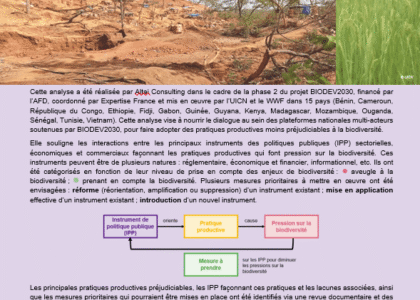
This analysis was carried out by Altai Consulting as part of phase II of the BIODEV2030 project. It is intended to fuel dialogue within the national multi-stakeholder platforms supported by BIODEV2030, with a view to encouraging the adoption of production practices that are less damaging to biodiversity.
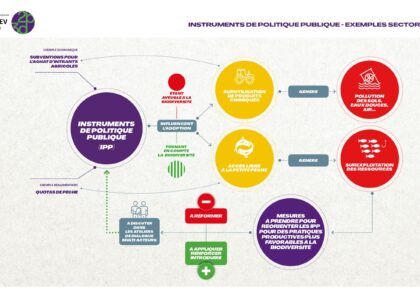
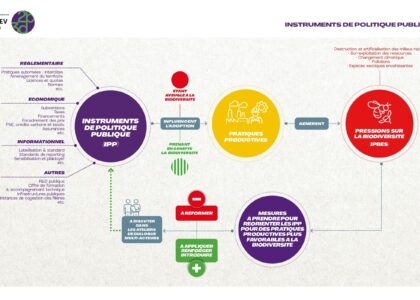
Biodiversity and public policy - Exemple d’application de la méthodologie IPPS

Biodiversity and public policy - Méthodologie d’identification des Instruments de Politiques Publiques Sectoriels

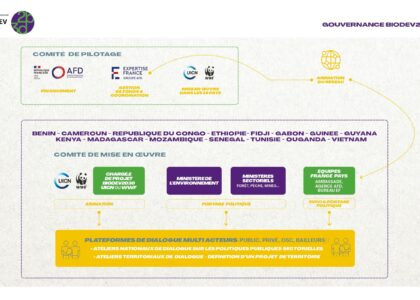
Others - BIODEV2030 Phase II project governance

BIODEV2030 Phase II governance infographic

Biodiversity and public policy - Vidéos - Biodiversity and public policies – Videos – Altai country fact sheets: sectoral public policies and biodiversity

Capitalization - Reports - Results of the dialogue process and commitments obtained in the 16 countries

Capitalisation - Commitments - Reports - EVALUATION REPORT ON VOLUNTARY COMMITMENTS AND RESULTS OF THE BIODEV2030 PROJECT IN ITS 16 INTERVENING COUNTRIES

Biodiversity and public policy - Vidéos - Guide d’utilisation des fiches pays Altai : politiques publiques sectorielles et biodiversité

Biodiversity and public policy - Rapports - RAPPORT D’ANALYSE TRANSVERSALE – POLITIQUES PUBLIQUES SECTORIELLES & PRESSIONS SUR LA BIODIVERSITE

Report prepared by Altai Consulting for IUCN and WWF | 2024 This report aims to contribute to the alignment of economic, sectoral (agriculture, mining, fisheries, forestry, etc.), and environmental (particularly biodiversity-related) policies—a key aspect of the mainstreaming approach. Covering the 15 countries and all priority sectors of activity, it proposes, in particular, to: • Identify and present suggestions for measures on priority IPPS. • Identify and present a set of experiences with IPPS reforms that have worked or failed, and the associated factors for success or failure.