Biodiversity and ecosystem services are deteriorating worldwide. According to the latest IPBES report, current trajectories are not sufficient to achieve the goals of conservation and sustainable use of nature. Profound changes are needed, particularly in economic terms.
Since 2019, 16 countries have been experimenting with the BIODEV2030 method to accelerate the integration of biodiversity into at least two economic sectors identified as priorities for biodiversity and the country's development. The method comprises 3 key stages:
- A scientific diagnosis of the threats to biodiversity,
- A study of the sectors with the greatest impact to identify areas for commitment,
- Sectoral and cross-sectoral dialogue within multi-stakeholder platforms.
Its aim is to encourage voluntary commitment on the part of private-sector players, to integrate biodiversity into their activities and to define priority actions to reduce pressure.
Drawing on the lessons learned from this experience, we hope to contribute to the negotiations to convince Parties of the relevance of using a method such as BIODEV2030 to ensure the implementation of the future global framework for biodiversity.
Indeed, a strategic and well-coordinated approach to mainstreaming in several key sectors can contribute to achieving several targets of the future framework, including 14 (integration of biodiversity values into public policy), 15 (adoption of sustainable practices by businesses), 18 (reorientation of incentives and subsidies) and 19 (mobilization of resources).
Through the prism of BIODEV2030, the action plan for the long-term strategic approach to biodiversity mainstreaming (CBD/SBI/3/13/Add.1) could be completed. It could refer to the BIODEV2030 method, and in particular to the need to create a national cross-sectoral multi-stakeholder dialogue platform representative of all stakeholders. This platform would enable them to take ownership of biodiversity issues, take part in debates and take responsibility for actions and impacts.
At COP15 (December 7 to 19, 2022 in Montreal) we will be presenting concrete keys to implementing the future global framework, and giving the floor to private-sector players, whose mobilization is necessary to achieve the objectives of the future global framework.

OTHER ITEMS
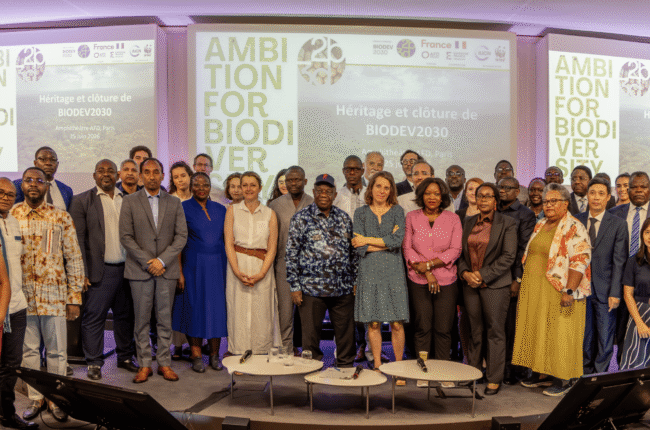
BIODEV2030 Comes to a Close: Six Years of Commitment to Placing Biodiversity at the Heart of Policies and Economic Sectors
On June 25, 2026, the BIODEV2030 partners met in Paris at the offices of the French Agency for […]
Read more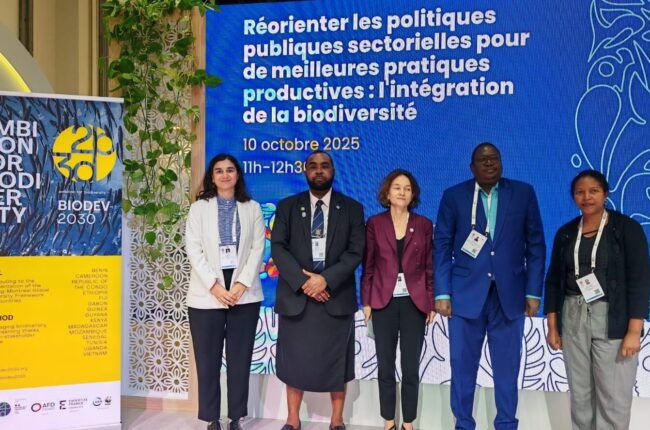
BIODEV2030 at the IUCN World Conservation Congress: an opportunity to promote project results
The World Conservation Congress, organized by the International Union for Conservation of Nature (IUCN), was held from 9 to [...].
Read more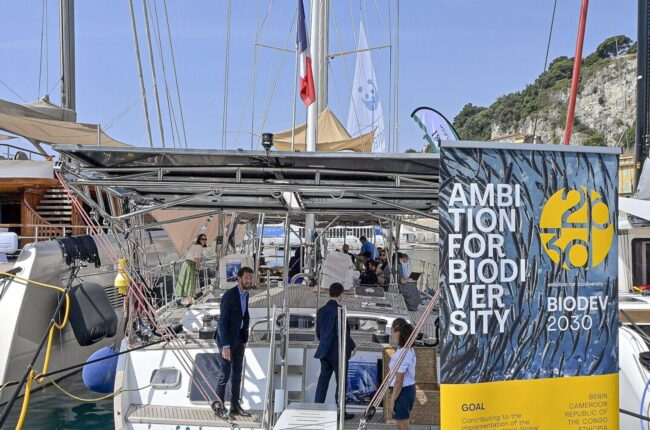
UNOC3: perspectives on better integration of marine biodiversity into public fisheries policies and production practices
France co-hosted the third United Nations Ocean Conference (UNOC-3) in Nice, France, from 9 to [...].
Read more
Identifying and discussing sectoral public policy instruments with a high impact on biodiversity
Encouraging changes in production practices at national level: BIODEV2030 supports countries in identifying the best policy instruments [...].
Read more