BIODEV2030 countries agree on six key sectors for the economy and biodiversity
By the end of October 2021, 13 of the 16 BIODEV2030 pilot countries had selected the economic sectors considered for the development of voluntary sectoral commitments in favor of biodiversity. This choice was made in a concerted manner and is based on a scientific assessment of the threats to biodiversity at national level.
A ROBUST SCIENTIFIC METHOD
By analyzing the drivers of biodiversity erosion in relation to economic sectors, we were able to rank the threats to species and ecosystems in each of the pilot countries . This study is based on a robust scientific methodology combining a review of existing literature, interviews with national experts, mapping of land use and associated anthropogenic pressures, IBAT (Integrated Biodiversity Assessment Tool) data and the IUCN STAR (Species Threat Abatement & Restoration) metric.
MULTI-STAKEHOLDER EXCHANGES TO SELECT SECTORS
Multi-stakeholder workshops bringing together government, civil society, private sector and research players enabled the scientific results of the diagnoses to be shared and the issues to be taken on board by all players. These exchanges helped to identify the main economic sectors impacting species and ecosystems, and to select at least two priority sectors per country on the basis of environmental, socio-economic and political criteria.
Whileagriculture is a priority shared by all countries, five other sectors have been identified as contributing to the erosion of biodiversity and the development of countries: fisheries, the extractive sector, forestry, energy and infrastructure.
INDUSTRY APPROACH / LANDSCAPE APPROACH
By analyzing the drivers of biodiversity erosion in relation to economic sectors, we were able to rank the threats to species and ecosystems in each of the pilot countries . This study is based on a robust scientific methodology combining a review of existing literature, interviews with national experts, mapping of land use and associated anthropogenic pressures, IBAT (Integrated Biodiversity Assessment Tool) data and the IUCN STAR (Species Threat Abatement & Restoration) metric.
Photo credits: Emmanuelle Andrianjafy / AFD
Find out more about threat diagnostics and selected sectors by country :
OTHER ITEMS
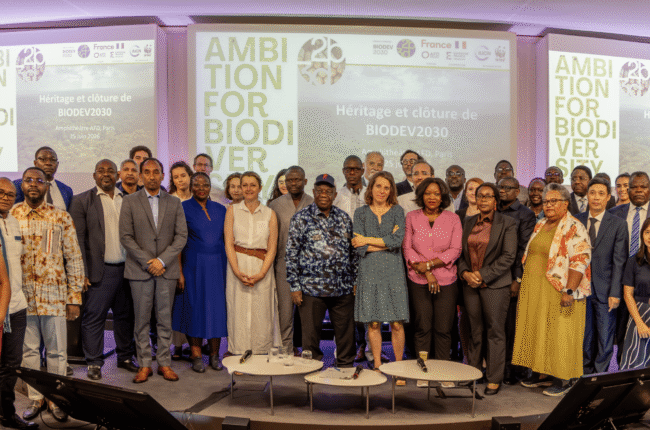
BIODEV2030 Comes to a Close: Six Years of Commitment to Placing Biodiversity at the Heart of Policies and Economic Sectors
On June 25, 2026, the BIODEV2030 partners met in Paris at the offices of the French Agency for […]
Read more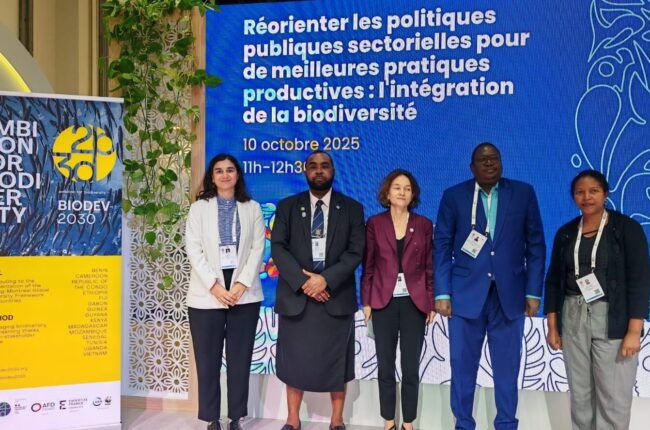
BIODEV2030 at the IUCN World Conservation Congress: an opportunity to promote project results
The World Conservation Congress, organized by the International Union for Conservation of Nature (IUCN), was held from 9 to [...].
Read more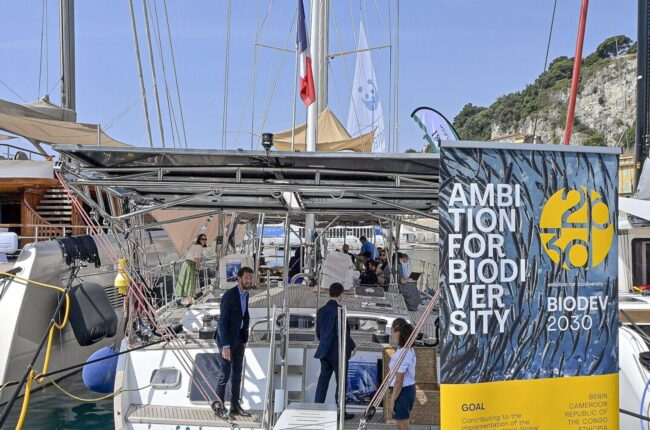
UNOC3: perspectives on better integration of marine biodiversity into public fisheries policies and production practices
France co-hosted the third United Nations Ocean Conference (UNOC-3) in Nice, France, from 9 to [...].
Read more
Identifying and discussing sectoral public policy instruments with a high impact on biodiversity
Encouraging changes in production practices at national level: BIODEV2030 supports countries in identifying the best policy instruments [...].
Read more