Encouraging changes in production practices at national level: BIODEV2030 supports countries in identifying priority sectoral public policy instruments.
Phase II of BIODEV2030 operates at three complementary levels: i) at national level, through support for public authorities in identifying sectoral public policy instruments to be reformed to encourage changes in practice; ii) at territorial level, through support for the design of a pilot territorial project per country, aimed at concretizing the actions to be taken to reconcile biodiversity (BIO) and development (DEV), iii) at international level through the creation of a community of practice and capacity-building for stakeholders, as well as the mobilization of resources for sectoral biodiversity integration pilot projects.
At national level, the project aims to identify the main sectoral public policy instruments (SPPIs) to be reformed or introduced to support changes in production practices, and to discuss them with sectoral ministries and financial players at national dialogue workshops.
To carry out this work, BIODEV2030 enlisted the technical support of Altai Consulting, which carried out the analysis for 14 of the 15 project countries, based on a literature review and semi-structured interviews with national experts. The Republic of Congo, which has different national objectives for Phase II of the project, was excluded from the scope of this study.
This support to countries should help ensure that economic, sectoral (agriculture, mining, fisheries, forestry, etc.) and environmental (particularly biodiversity-related) policies are consistent, a key aspect of the mainstreaming approach. This global integration of biodiversity helps to prevent economic and sectoral policies from encouraging actors (producers) to adopt production practices that are harmful to nature, in contradiction with a country's biodiversity commitments.
For each country, the sectors and value chains targeted by the study were selected during Phase I by the stakeholders in each country, on the basis of the diagnoses carried out and by combining their impacts on biodiversity and their potential for development. Depending on the country context, however, certain changes may have occurred (sensitivity of certain sectors, political will to prioritize dialogue in certain sectors, history of IUCN and WWF involvement).
Analysis of sectoral public policy instruments: what are we talking about in terms of biodiversity?
The public policy instruments analyzed are mainly economic (subsidies, taxes), regulatory (zoning, quotas), informational (labels, reporting obligations) and programmatic (R&D, training). These instruments can then be divided into sectoral, economic and fiscal, and commercial policies.
Country analyses aim to highlight the way in which sectoral, economic and commercial public policies shape the productive practices that induce the greatest pressures on biodiversity, and then to suggest measures to reduce these pressures (see Figure 1). This approach is based on the DPSIR framework(Driver - "Practice", Pressure - "Pression", State, Impact, Response - "Mesure à envisager"). Detailed data on the consequences for biodiversity (State) and humans (Impact) are available in the diagnoses carried out in phase I of the BIODEV2030 project. The description of pressures follows the IPBES nomenclature (Intergovernmental Platform on Biodiversity and Ecosystem Services).
A typology of measures to be implemented has been drawn up: reform (reorientation, reinforcement or abolition) of an existing instrument; effective implementation of an existing instrument; introduction of a new instrument.
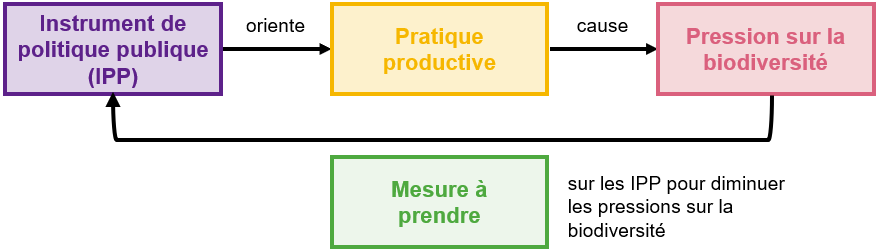
Figure 1: Outline of the approach used for country analyses
A classification of IPPSs was then proposed, according to their impact on biodiversity: biodiversity-blind; biodiversity-aware.
Finally, an analysis of the main sectoral practices detrimental to biodiversity in the target countries highlights three major pressures: the destruction, fragmentation and artificialization of natural environments (or changes in land use), pollution (soil and water in particular) and the over-exploitation of resources.
Country factsheets to discuss potential sectoral public policy changes at national level.
Altai Consulting's exercise produced two types of deliverables:
- From country analyses on the extent to which biodiversity is taken into account in the sectoral public policies of targeted sectors, integrating where relevant economic and trade policies and regional and international agreements (e.g. in the Economic Community of West African States, or the European Union's Deforestation Regulation [RDUE]);
- A transversal reportThe aim of this report is to compile the lessons learned from the country analyses, compare them and put them into perspective with the help of additional global resources.
These documents can be consulted on our website, via the country pages, as well as in the Resources category, under the "Public policies and biodiversity" tab. To facilitate use of the country fact sheets, presentation videos have been produced in English and French, and are also available in the " Video" tab.
In view of the short deadlines imposed on the exercise, the country fact sheets do not claim to be exhaustive. Rather, they are intended to fuel discussions between stakeholders at national level, during the second multi-stakeholder dialogue workshops scheduled to start in December 2024. By proposing a list of measures to be discussed with the support of national experts, these sheets offer recommendations for further study in each country, in conjunction with the technical assistants implementing the project. They also suggest resource persons who can support the IPPS discussion processes in the 14 countries.
The cross-cutting report presents the main elements and trends by sector, geographical area and level of economic development. The sectors targeted in the report are: agriculture (concerns 11 countries), forestry (6 countries), fisheries (5 countries), extractive industries (4 countries), and pastoralism (3 countries). It also lists the most recurrent IPPS, as well as the obstacles and opportunities observed. Finally, experimental programs and policies identified by the literature review and interviews are listed: national land-use plans, policies based on data collection, payment mechanisms for environmental services, etc. Country examples are provided in the appendix. Country examples are provided.
These deliverables provide guidelines for implementing thebiodiversity mainstreaming approach promoted by BIODEV2030 since the start of Phase I. The proposed reforms will enable countries to move towards mainstreaming strategies, as defined by the Convention on Biological Diversity (CBD)* :
- reducing the negative impacts and increasing the positive impacts of sectors on biodiversity;
- enhancing and restoring biodiversity and ecosystem services;
- securing local communities' access to the benefits derived from biodiversity use, and integrating them into the design and implementation of biodiversity policies
*Secretariat of the Convention on Biological Diversity, 2011, NBSAP training modules version 2.1 - Module 3. Mainstreaming biodiversity into national sectoral and cross-sectoral strategies, policies, plans and programs
As the overall objective of BIODEV2030 phase II is to support the 15 countries in implementing the Kunming-Montreal Global Framework for Biodiversity, in particular by helping them revise and/or implement their National Biodiversity Strategies and Action Plans (NBSAPs), the assessments and recommendations set out in these fact sheets provide a sound basis for thinking about mechanisms for aligning biodiversity strategy and sectoral policies. Several BIODEV2030 countries have set up national biodiversity committees dedicated, among other things, to reviewing and monitoring the implementation of NBSAPs.
OTHER ITEMS
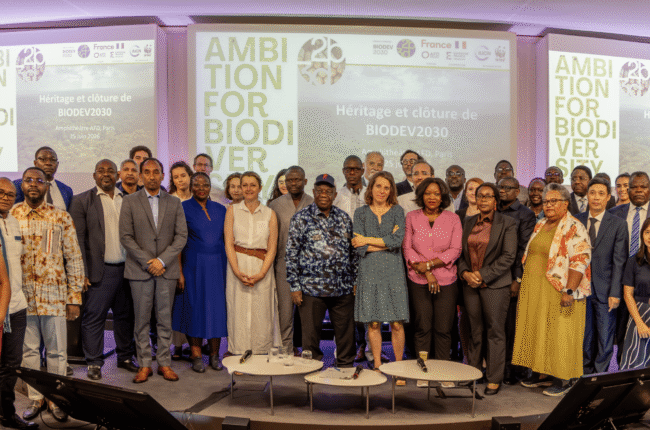
BIODEV2030 Comes to a Close: Six Years of Commitment to Placing Biodiversity at the Heart of Policies and Economic Sectors
On June 25, 2026, the BIODEV2030 partners met in Paris at the offices of the French Agency for […]
Read more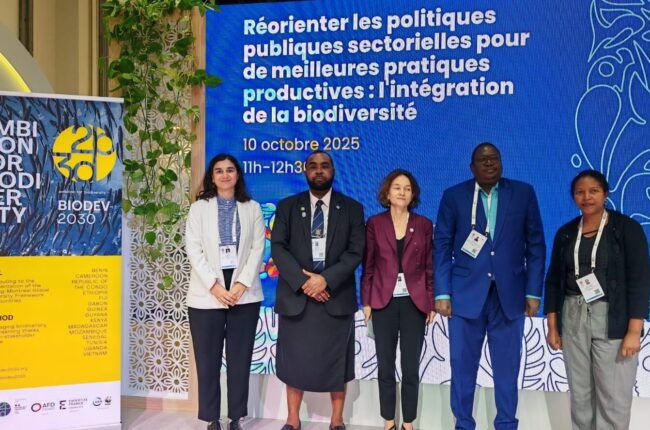
BIODEV2030 at the IUCN World Conservation Congress: an opportunity to promote project results
The World Conservation Congress, organized by the International Union for Conservation of Nature (IUCN), was held from 9 to [...].
Read more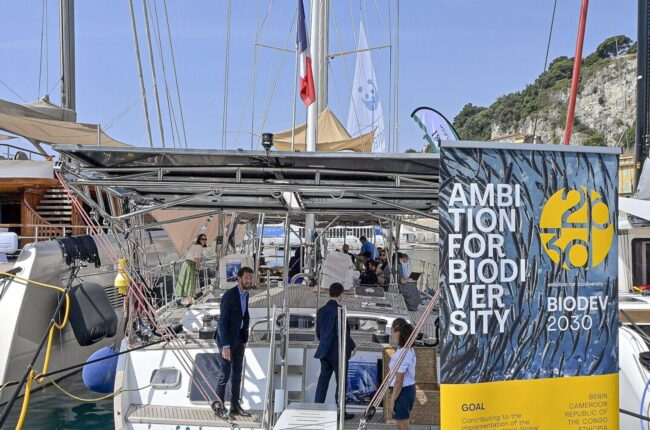
UNOC3: perspectives on better integration of marine biodiversity into public fisheries policies and production practices
France co-hosted the third United Nations Ocean Conference (UNOC-3) in Nice, France, from 9 to [...].
Read more
Identifying and discussing sectoral public policy instruments with a high impact on biodiversity
Encouraging changes in production practices at national level: BIODEV2030 supports countries in identifying the best policy instruments [...].
Read more