The ‘Pathway to Prosperity’ proposed by Ethiopia’s 2021-2030 National Development Plan aims to ensure inclusive and equitable development. However, such development is highly dependent on biodiversity, which is already under pressure. Launched by IUCN in the country in July 2021, BIODEV2030 aims to accelerate the mainstreaming of biodiversity into economic sectors which are key to biodiversity and development. Implemented with the support of the Global Green Growth Institute (GGGI) Ethiopia Country Office, the pilot programme creates a space for multistakeholder dialogue based on scientific diagnosis, in order to catalyse voluntary commitments from key economic actors to contribute to Ethiopia’s sustainable ‘Pathway to Prosperity’. As CBD National focal point Dr Melesse puts it: « The multiple challenges we are facing could be translated into huge opportunities to fulfil conservation and development outcomes. BIODEV2030 is one of the opportunities that we can lever to overcome our challenges.”
National Biodiversity Threat Assessment
A new study 'National Biodiversity Threat Assessment - ranking major threats impacting Ethiopia's biodiversity' led under BIODEV2030 was released in January 2022.
This diagnosis provides important inputs to sciencebased workshops, with the aim of identifying priorities for the Ethiopian agenda towards an ambitious Post2020 Global Biodiversity Framework.
BIODEV2030, a platform to support and coordinate multi-stakeholder dialogue in Ethiopia
As biodiversity conservation endeavors are spread over several ministries in Ethiopia, national and coordinated mobilization is critical to the revision and implementation of the national biodiversity strategy. In this respect, BIODEV2030 intensifies the facilitation of meetings with stakeholders to improve their collaboration:
- On 28 January, a National Stakeholders Workshop organised with the CBD National Focal Point was held in Addis Ababa with representatives of the private sector, the Global Green Growth Institute and other civil society organisations. The results of the National Biodiversity Threat Assessment were presented and discussed to identify key economic sectors and sub-sectors impacting on biodiversity in the country and to select two landscapes for further analysis and conservation.
- On 18,19 and 20 April, BIODEV2030 and the CBD National Focal Point organized a working session with the national team of negotiators at Gulale Botanical Garden, to help clarify Ethiopia's position prior to Post2020 framework negotiations.
- On 20 May, for Biodiversity Day, BIODEV2030 and the CBD National Focal Point organised a high-level National Policy briefing in Addis Ababa with policy makers, private sector and finance leaders (National Chamber of Commerce; Ethiopia Bankers Agricultural Association), Ethiopia Research and Civil society representatives, in presence of Ethiopian media. The objective was to raise awareness of decision-makers about their impacts and dependencies on biodiversity. The event opened the debate on the challenges and opportunities to mainstream biodiversity at national, sectoral and landscape levels and fuelled a constructive discussion on mobilising voluntary commitments from stakeholders in general and the private sectors in particular. As underlined by Mr. Shewaye, representative of Ethio-Wetlands: " We are in the community to bring changes towards fulfilling nature development. "
Achievements and next steps for BIODEV2030 in Ethiopia in 2022
BA diagnosis of the Agriculture (cereals & coffee), Livestock (rearing and ranching) and Forestry (small scale logging and wood harvesting) sectors and their value chain, in Bale eco-region and the South West natural forest of Ethiopia started in May to identify opportunities of voluntary commitments from economic actors for biodiversity in those landscapes.
Building on the positive feedbacks from the HighLevel Policy Briefing workshop, BIODEV2030 will replicate such workshops, first at the regional level, then with financial institutions, international and regional organizations and potential donors such as the European Union Commission, the African Development Bank and other possible contributors to the Post2020 biodiversity strategy.
As recognized by Mr. Wubie Mengistu of the Ethiopian Chamber of Commerce, the mainstreaming of biodiversity and transformative change will demand continuous efforts: "Private sector players are less informed about vital roles of biodiversity and ecosystems as compared to other sectors." Hence, our first priority would be raising awareness of the private sector players by all possible means, most preferably through using media and creation of periodic private sector platforms.
NEXT STEPS
BIODEV2030 will replicate such workshops, first at the regional level, then with financial institutions, international and regional organizations and potential donors such as the European Union Commission, the African Development Bank and other possible contributors.
The article is available in PDF here.
OTHER ITEMS
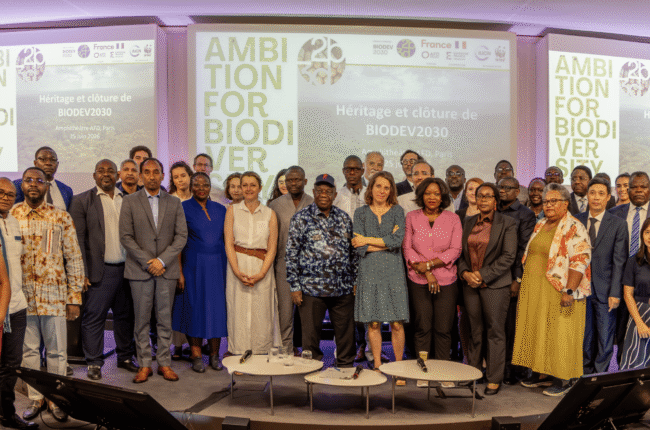
BIODEV2030 Comes to a Close: Six Years of Commitment to Placing Biodiversity at the Heart of Policies and Economic Sectors
On June 25, 2026, the BIODEV2030 partners met in Paris at the offices of the French Agency for […]
Read more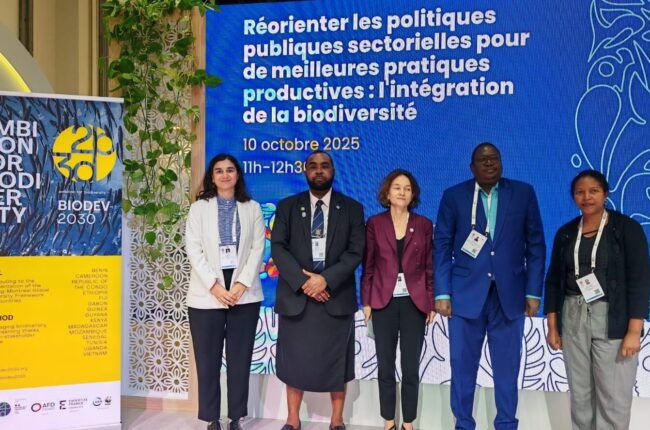
BIODEV2030 at the IUCN World Conservation Congress: an opportunity to promote project results
The World Conservation Congress, organized by the International Union for Conservation of Nature (IUCN), was held from 9 to [...].
Read more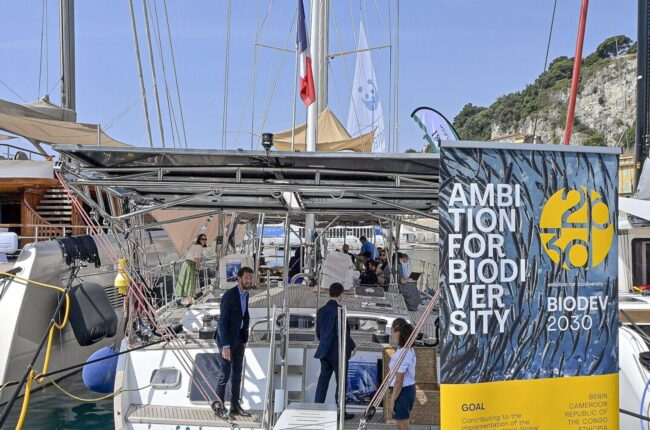
UNOC3: perspectives on better integration of marine biodiversity into public fisheries policies and production practices
France co-hosted the third United Nations Ocean Conference (UNOC-3) in Nice, France, from 9 to [...].
Read more
Identifying and discussing sectoral public policy instruments with a high impact on biodiversity
Encouraging changes in production practices at national level: BIODEV2030 supports countries in identifying the best policy instruments [...].
Read more