Photo credit: Daniel Murillo & BIODEV2030 team
The fifteenth Conference of the Parties (COP15) on biodiversity was held in Montreal (Canada) from December 7 to 19, 2022. Over 17,000 representatives from governments, civil society, indigenous communities, the private sector and research institutions gathered to adopt the new global framework for biodiversity.
The project team took part in the adventure in order to promote the BIODEV2030 mainstreaming method being tested in 16 countries, but also to give a voice to the private sector players whose mobilization is necessary to implement the framework. In this way, the project's country stakeholders (private sector players and national CBD focal points) testified to the benefits of the BIODEV2030 method at several events organized by project partners IUCN, WWF France and Expertise France. Private sector representatives from Fiji, Madagascar, Mozambique and Tunisia gave testimonials on the added value of BIODEV2030 for their sector (awareness & understanding of the issues) and on initiatives to change practices.

The project also enjoyed high visibility on the stand shared with the POST2020 project. Numerous meetings were organized on the sidelines of the negotiations, including exchanges between BIODEV2030 countries, public and private stakeholders, donors and youth communities. These discussions highlighted the contribution of BIODEV2030 at national level to the implementation of the framework, as well as the needs and prospects for financing voluntary sectoral commitments.
Adoption of the new global framework for biodiversity

After four years of discussions and two weeks of negotiations, the 196 parties adopted the new global framework for biodiversity. Through this historic agreement, which is broken down into 4 objectives and 23 targets, the countries have set themselves the mission of "halting and reversing the loss of biodiversity by 2030". Key measures include a commitment to protect at least 30% of land and sea by 2030, halve the risks associated with pesticides, increase agroecological practices, and double funding for nature (from public and private sources).
While the agreement does indeed refer to taking biodiversity into account in economic activities, the adoption of the action plan for the Long Term Approach To Mainstreaming has been postponed until future negotiations.
In the coming months, BIODEV2030 will be particularly involved in the implementation of the framework, through the dissemination of the project's lessons, and by continuing its advocacy work on the issue of mainstreaming.
7 BIODEV2030 interventions at COP15
BIODEV2030 project stakeholders (private sector representatives, national focal points and project implementation partners) took part in 7 side-events at COP15.

1. Leading the negotiations towards a transformative global framework: testimonies from civil society on the challenges of a successful agreement
With Prasanna Kumar, General Operations Manager of Praveens Kava (Fiji)
This session, co-organized with POST2020, focused on the place and role of societal players in the adoption & implementation of the framework. BIODEV2030 highlighted the need for the private sector to understand its dependence on and impact on biodiversity, and to raise farmers' awareness of their practices.
2. Integrating biodiversity into the productive, economic and financial sectors: lessons from Latin America and the Caribbean
With Romy Andrianarisoa, President of the Commission for Sustainable Development and Business Ethics (Madagascar) & Salah Mhamdi, Executive Director of the Chambre Nationale des Producteurs de Ciments (Tunisia)
This session of testimonials from successful mainstreaming initiatives was co-organized with CEPAL. The importance of diagnostics to quantify the impact of sectors on biodiversity was raised as a means of federating players and guiding action plans. Although multi-stakeholder dialogue is necessary, it is still not sufficiently organized.
3. Challenges and opportunities in implementing the post-2020 global biodiversity framework
With Quentin Dupetit, BIODEV2030 coordinator (Expertise France)
This workshop organized by IDDRI focused on the challenges of implementing the framework. Participants exchanged views on existing initiatives (countries and organizations).
4. Towards a food system that respects nature - What happens after COP15?
With Romy Andrianarisoa (Madagascar)
This workshop, organized by IDDRI, brought together players from the worlds of finance, research and the private sector to discuss the levers to be pulled to implement sustainable production systems. While there was consensus on the need for scientific data, it was noted that a transfer of skills to national expertise is necessary to change scale and thus accelerate implementation.
5. Moving towards nature-friendly development: lessons from Africa and the Pacific
With Prasanna Kumar (Fiji) ; Romy Andrianarisoa (Madagascar) ; Salah Mhamdi (Tunisia) & Luis Fortunato Lifanissa, Federation of Agrarian Association (Mozambique)
This lunchtime discussion organized by IUCN brought together partners from the BIODEV2030 private sector to share their experiences of integrating biodiversity into their respective sectors and countries.
6. Integrating biodiversity into key economic sectors
With Romy Andrianarisoa (Madagascar) ; Luis Fortunato Lifanissa, (Mozambique) & Antonin Vergez (IUCN)
Co-organized with IUCN, this session launched the publication " Mainstreaming biodiversity into priority economic sectors ", which draws lessons from the 16 countries' threat assessments to identify and select priority sectors.
7. Scientific assessments and inclusive governance to support biodiversity mainstreaming: testimonials from Africa and Latin America
With Luis Fortunato Lifanissa, (Mozambique) ; Maryo Melesse, NFP-CBD (Ethiopia) & Antonin Vergez (IUCN)
This session, co-organized with POST2020, drew lessons from the project, focusing on the 16 countries' threat diagnostics to identify and select priority sectors.
OTHER ITEMS
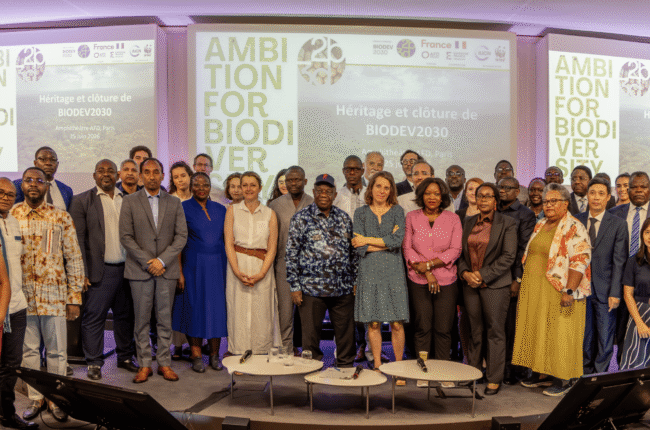
BIODEV2030 Comes to a Close: Six Years of Commitment to Placing Biodiversity at the Heart of Policies and Economic Sectors
On June 25, 2026, the BIODEV2030 partners met in Paris at the offices of the French Agency for […]
Read more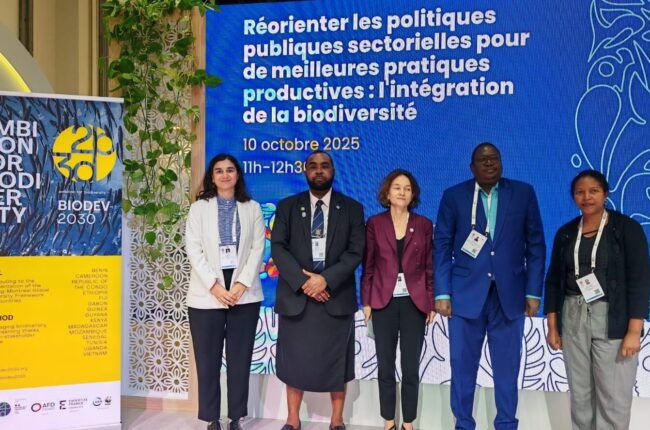
BIODEV2030 at the IUCN World Conservation Congress: an opportunity to promote project results
The World Conservation Congress, organized by the International Union for Conservation of Nature (IUCN), was held from 9 to [...].
Read more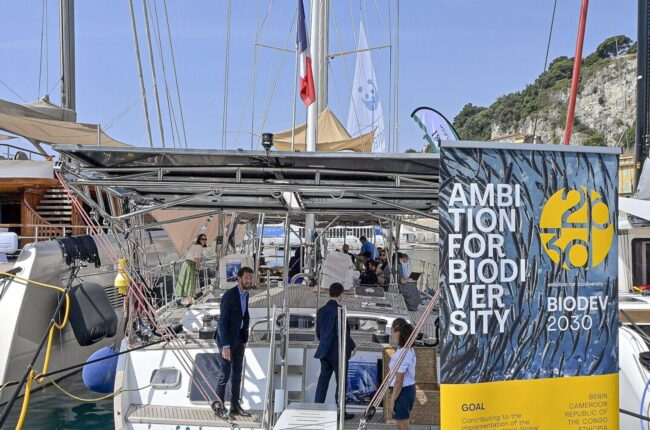
UNOC3: perspectives on better integration of marine biodiversity into public fisheries policies and production practices
France co-hosted the third United Nations Ocean Conference (UNOC-3) in Nice, France, from 9 to [...].
Read more
Identifying and discussing sectoral public policy instruments with a high impact on biodiversity
Encouraging changes in production practices at national level: BIODEV2030 supports countries in identifying the best policy instruments [...].
Read more