A voluntary commitment is an agreement by one or more stakeholders to mobilize and implement a series of forward-looking, strategic, shared and science-based actions that will bring about a positive and measurable change in the health of biodiversity.
Why?
Strengthening national policy mixes for biodiversity conservation
What?
A moral commitment, made public and accompanied by an action plan detailing its implementation
By whom?
All legitimate players (private, public, CSOs) in an economic sector at different territorial levels
How?
Explicitly: the voluntary commitment must be concrete, targeted, achievable and replicable.
BIODEV2030 aims to encourage the emergence of voluntary commitments (VCs) from sector players in 16 pilot countries. These VCs will contribute to a post-2020 Global Biodiversity Framework supported by society as a whole and echoing not only the mobilization of governments, but also economic players and civil society in favor of biodiversity.
Sharing the knowledge and expectations of all stakeholders, as well as an inclusive and transparent negotiation process, are prerequisites for the formulation and adoption of these voluntary sectoral commitments.
The BIODEV2030 method for achieving
voluntary commitments
The methodology proposed by BIODEV2030 is based on 2 phases to stimulate the formulation of concrete and therefore effective voluntary commitments:
- information and diagnosis to raise awareness of the need for change in relation to the degradation of natural resources, and the identification of key economic sectors on which to focus,
- setting up multi-stakeholder platforms to catalyze dialogue between the relevant players and thus co-construct sector-specific voluntary commitments.
Voluntary commitments are built on a clear understanding of the results of the diagnosis, the involvement of relevant stakeholders throughout the process, and recognition of the plurality of interests and values.
Our recommendations for the design
of a voluntary undertaking
The voluntary commitment must :
consider the scale of the expected change
on biodiversity (via indicators) right from the design stage.
be linked to value chains
with identified players and a defined favorable environment.
Rooted in national regulations
voluntary commitment will be strengthened if it is linked to SPANBs, NDCs and international agreements
be part of a long-term trajectory
with SMART (specific, measurable, achievable, relevant, time-bound) indicators and objectives.
be accompanied by an action plan
and detailed implementation plan (target & players' roles).
include a monitoring and evaluation system
piloted on the scale of the territory concerned. It will make it possible to revise objectives and available resources according to results, compare changes in practices and measure the impact on the state of biodiversity.
Voluntary commitment will be strengthened if it is accompanied by complementary actions (technical, financial or human resources, government incentives, resources dedicated to coordination between players, promotion of committed players, etc.) that could enable or accelerate the expected change. To achieve this, it must :
- explain the role of the government, NGOs and/or financial players involved,
- indicate actions whose success depends on a collaborative approach involving several players,
- not to subject the commitment of sector players to the implementation of enabling conditions.
Voluntary commitment will be legitimized if it is co-constructed by all the relevant players on the subject, in the sector or in the region, relying on opinion leaders who have a capacity to drive change.
Once the voluntary commitment has been signed by the stakeholders, it will be important to promote it through positive communication about the efforts and commitments of the players involved.
From January 20 to 25, the BIODEV2030 team met for a workshop on the preliminary steps involved in assisting players to design and negotiate concrete sectoral voluntary commitments. The workshop consisted of four modules covering both the content of the VCs and the strategy for engaging stakeholders.
Combining theoretical contributions, group discussions and expert input, the workshop produced a roadmap that participants can use as a basis for translating and adapting the workshop's reflections into their national work plans.
Module 1: Sector analysis
Based on an analysis of the cotton sector in Burkina Faso, participants characterized the key elements expected in sector diagnostics. This case study identified six points of attention to establish the link between the sector, change and key players:
- include a complete, critical and quantified analysis of value chains;
- identify the key changes required at each stage of the value chain ;
- identify the key players in change, who produce or influence it;
- showcase best and replicable practices;
- analyze the costs of change measures and present models of industry behavior if they are implemented;
- not forgetting those in the craft sector.
Module 2: Voluntary sector commitments
This module provided an opportunity to share a common definition and specify the contours of sectoral voluntary commitments. Given the diversity of possible VCs at different scales and among different players, participants agreed on the importance of specifying VCs sufficiently so that they can be the subject of target indicators and a monitoring-evaluation protocol. Similarly, participants agreed on the need to anchor EVs in national and international strategies and action plans (NBSAPs, NDCs...), and to support them with complementary actions. However, this anchoring in regulatory approaches must not be to the detriment of listening to and taking into consideration the proposals of sector players.
Module 3: Multi-stakeholder mobilization and negotiation processes
In group sessions, participants continued their analysis of stakeholders (governments and local authorities, private sector, civil society organizations) in terms of interests, motivations and constraints. This step is an essential prerequisite for preparing the mobilization and negotiation stages.
In the second part, four experts reported on two negotiation processes carried out 1) in the aluminum industry and 2) in the shrimp industry, putting into perspective the growing interest of donors in sustainable investments and the demarcation aspects of industries offering this type of commitment.
Module 4: Feedback on stakeholder mobilization
The exchange of views, fuelled by testimonials from Module 3, provided an opportunity to revisit the issue of stakeholder mobilization: participants reiterated the central role of the CBD focal point in mobilizing stakeholders. They also noted the importance of not trying to convince stakeholders during negotiations, but of listening to them in order to draw up EVs that meet with consensus.
In addition, feedback from Senegal and Kenya provided an opportunity to discuss the cross-sectoral and landscape approaches used in the BIODEV2030 project. While the local or regional level sometimes offers a privileged entry point for mobilizing stakeholders, liaison with central government must be ensured at every stage of the project.
Documents to download
Policy brief - Benchmarks used by the project team for voluntary quality commitments
Documents to download
Capitalization - Infographic: method for voluntary sector commitments
OTHER ITEMS
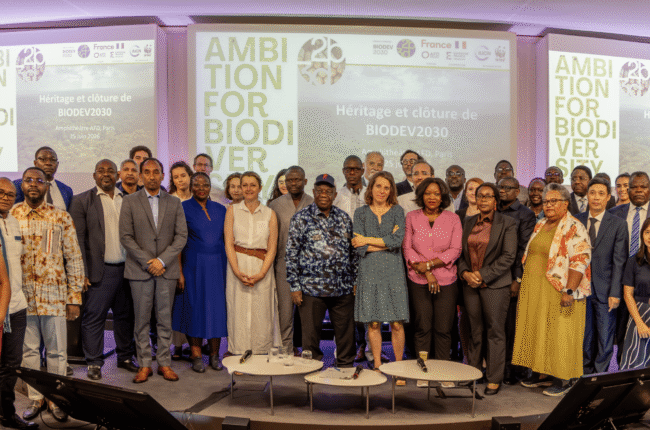
BIODEV2030 Comes to a Close: Six Years of Commitment to Placing Biodiversity at the Heart of Policies and Economic Sectors
On June 25, 2026, the BIODEV2030 partners met in Paris at the offices of the French Agency for […]
Read more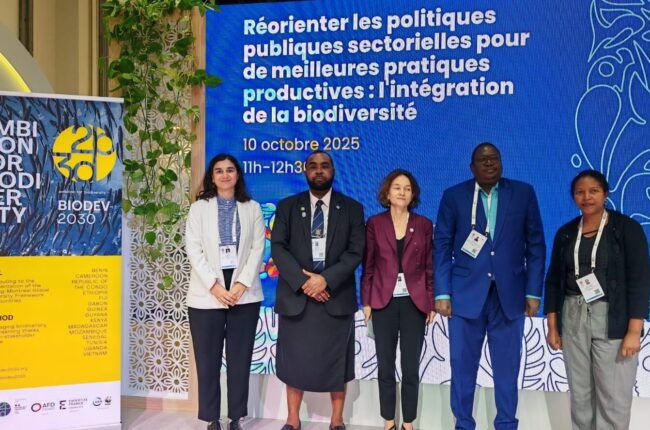
BIODEV2030 at the IUCN World Conservation Congress: an opportunity to promote project results
The World Conservation Congress, organized by the International Union for Conservation of Nature (IUCN), was held from 9 to [...].
Read more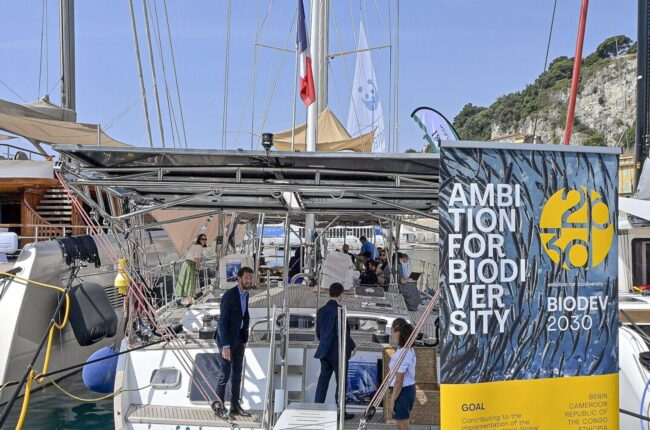
UNOC3: perspectives on better integration of marine biodiversity into public fisheries policies and production practices
France co-hosted the third United Nations Ocean Conference (UNOC-3) in Nice, France, from 9 to [...].
Read more
Identifying and discussing sectoral public policy instruments with a high impact on biodiversity
Encouraging changes in production practices at national level: BIODEV2030 supports countries in identifying the best policy instruments [...].
Read more